
RENE TORRES
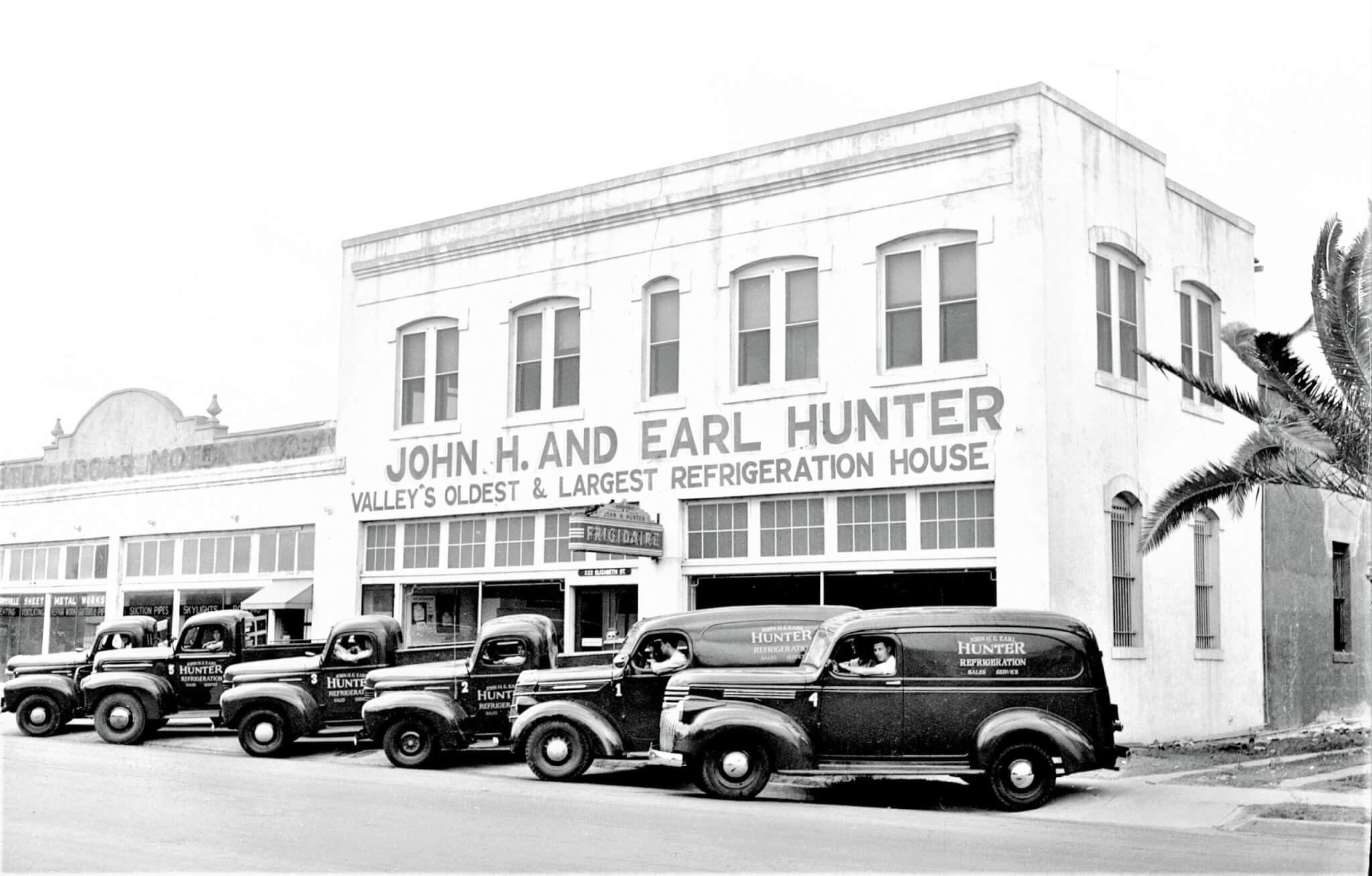
It was 1922, when the Hunter family decided to venture to South Texas and join many other northerners to make the Valley their home. A visitor of then, described Brownsville, as the modern “Garden of Eden.”
John H. Hunter was fresh out of the University of Texas with a physics and math degree in his pocket — where it remained for several years.
At the time, the Valley was agrarian and cabbage was the big money crop — the Hunters survived their first year as farmers, but for the next two years, the business struggled.
The inevitable happened in 1925 — John Hunter found love to be a good proposition as he discovered paradise and married Carolyn Webster.
The young, would-be entrepreneur, secured a job in town, doing dirt contracting and running filling stations. He was always looking for other opportunities, of which later he dove into, selling Delta light plants and Frigidaire refrigerators.
By 1929, John Hunter and his brother Earl Hunter made a substantial move to acquire the area-wide Frigidaire dealership. There was only one problem, the Great Depression, of which induced some troubling times for the business. But because of their versatility and innovative thinking, they endured.
Their next venture landed them in commercial refrigeration, a field that John Hunter could employ what he learned as a college student. One could say that they were ahead of their time when they created portable cooling machines for trucks used by vegetable shippers.
In those days, patrons could frequent the Capitol Theater and watch two movies for 25 cents in a cool environment. They had the Hunter brothers to thank for that. Taking one’s date to the Capitol was literally a cool thing to do. In earlier days, the theater used a low-tech cooling system — blocks of ice with a fan.
Aside from air-conditioning in the Capitol in Brownsville, patrons were also happy at the Arcadia in Harlingen and the Palace in McAllen. Brownsville High School students experienced what was to them a defining moment — when the Hunter brothers also left their footprints in the school’s auditorium. Before long, they dominated the AC industry, leaving their mark throughout the Rio Grande Valley.
When the ugly face of WWII appeared, the business took a temporary downfall for the duration of the war. After the conflict, the company was no longer local; it expanded to do some work in Central and South America.
In 1954, the country and Brownsville experienced growth, and with that came the construction of the Fort Brown Memorial Center. This gave the Hunters the biggest job since the victory in Europe. The 165 tons of air-conditioning surpassed any such installation in the Rio Grande Valley.
Want the story in its entirety? Pick up a copy of the San Benito News, or subscribe to our e-Edition by clicking HERE!




Recent Comments